
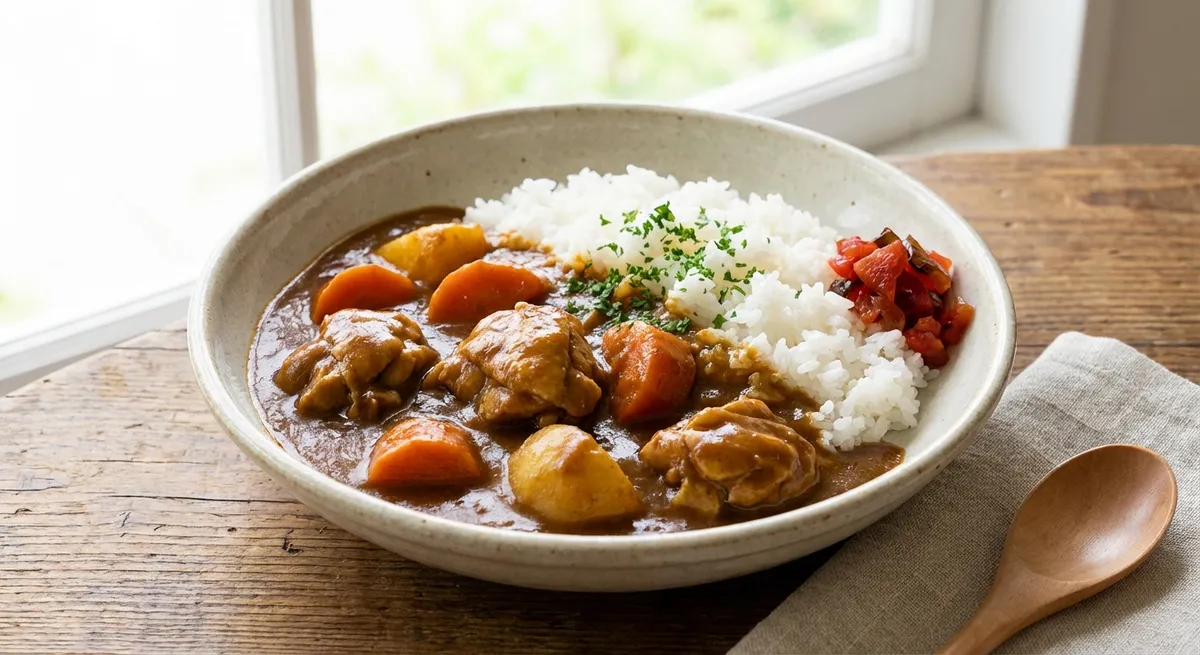
Japanese Curry Rice
Rich, mildly spiced Japanese curry with tender chicken and vegetables over fluffy white rice — Japan's ultimate comfort food.
Details

Ingredients
- 500g boneless chicken thighs, cubed
- 2 potatoes, cubed
- 2 carrots, sliced
- 1 large onion, diced
- 2 tbsp vegetable oil
- 3 cups water
- 1 package Japanese curry roux (4 blocks, such as Golden Curry)
- 1 tbsp soy sauce
- 1 tsp grated apple (optional)
- Steamed Japanese short-grain rice, for serving
- Pickled red ginger (fukujinzuke), for garnish
Instructions
- 1
Heat vegetable oil in a large pot over medium heat. Cook chicken for 3-4 minutes until lightly browned. Remove.
- 2
Sauté onion for 5 minutes until translucent. Add carrots and potatoes, stir for 2 minutes.
- 3
Add water and bring to a boil. Return chicken, reduce heat, and simmer for 20 minutes until vegetables are tender.
- 4
Turn off heat. Break curry roux blocks into the pot and stir until completely dissolved.
- 5
Simmer on low for 10 minutes, stirring occasionally, until thickened. Add soy sauce and grated apple if using.
- 6
Serve ladled over steamed rice with pickled ginger on the side.
About This Recipe
Japanese Curry Rice, or 'Kare Raisu,' represents a quintessential example of yoshoku – Western-influenced dishes adapted into unique Japanese culinary staples. Introduced to Japan during the Meiji era via the British, who had, in turn, adopted curry from India, this dish has evolved into one of Japan’s most beloved comfort foods, found in homes, school cafeterias, and specialized curry restaurants across the nation. What makes it truly special is its distinct flavor profile: a harmonious blend of savory, sweet, and umami, with a gentle spice that is comforting rather than fiery. The cornerstone is the Japanese curry roux, typically sold in blocks, which imparts its signature thick, glossy texture and deep, complex flavor. Key techniques include carefully browning the chicken to lock in moisture and flavor, then simmering the vegetables until fork-tender, allowing them to release their natural sweetness into the rich broth before the roux is incorporated. While chicken is classic, beef, pork (often in tonkatsu form), or even a purely vegetarian version are popular variations. A touch of grated apple, as suggested, adds a subtle sweetness and depth to the sauce. Always serve over freshly steamed, fluffy Japanese short-grain rice, and a side of fukujinzuke (pickled red ginger) is a traditional, palate-cleansing garnish.
Tips & Tricks
- • To ensure a smooth, lump-free curry, melt the roux blocks gradually into the hot liquid, stirring continuously until fully dissolved. For even smoother results, remove a cup of hot liquid, dissolve the roux in it separately, then stir this mixture back into the main pot.
- • For a richer flavor and texture, consider browning the chicken thighs until slightly crispy before adding the vegetables. For a vegetarian option, replace chicken with hearty vegetables like mushrooms, bell peppers, eggplant, or chickpeas, adjusting simmering time as needed.
- • Japanese curry often tastes even better the next day as the flavors meld and deepen. Store leftovers in an airtight container in the refrigerator for up to 3-4 days. It reheats beautifully on the stovetop over low heat or in the microwave, adding a splash of water if it's too thick.
- • Beyond the traditional fukujinzuke, consider serving your curry rice with a soft-boiled egg, a side of crisp tonkatsu (fried pork cutlet) for a katsu curry experience, or a simple green salad with a bright, tangy dressing to balance the richness.
Nutrition Facts
Per serving (approximate)