
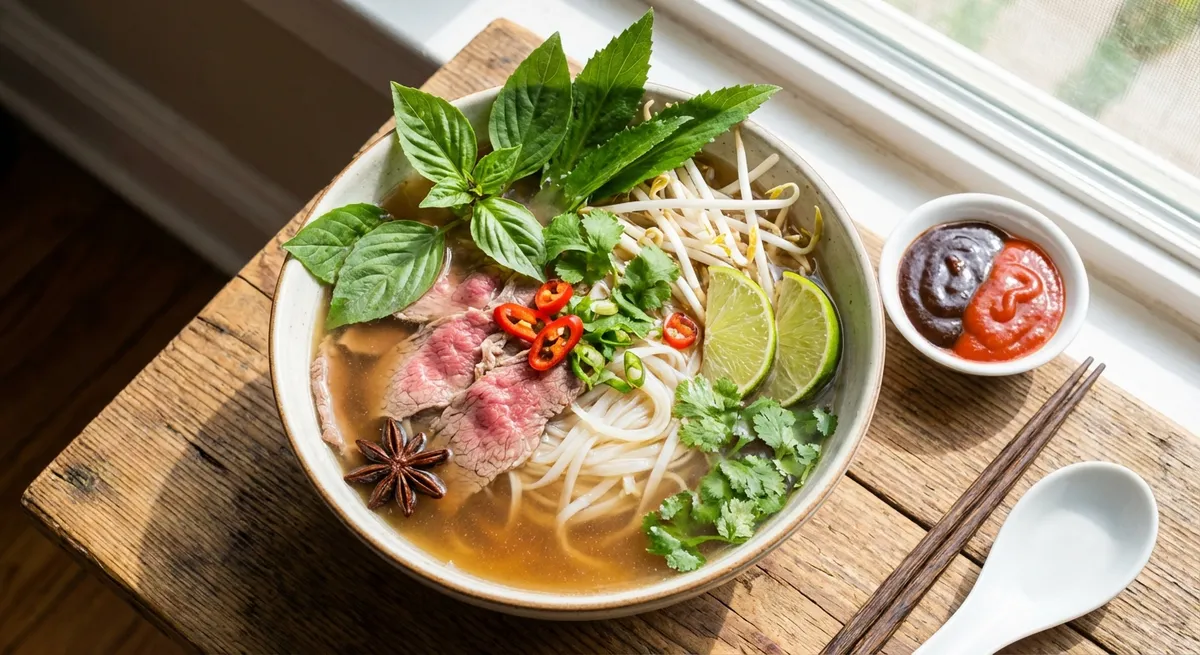
Vietnamese Pho Bo (Beef Pho)
Fragrant, star anise-scented beef broth ladled over silky rice noodles and thin slices of beef, piled high with fresh herbs.
Details

Ingredients
- 2 lbs beef bones (marrow and knuckle)
- 1 lb beef brisket or chuck
- 1 large onion, halved
- 4-inch piece ginger, halved lengthwise
- 3 star anise
- 4 whole cloves
- 1 cinnamon stick
- 3 tbsp fish sauce
- 1 tbsp sugar
- 1 lb dried rice noodles (banh pho)
- 1/2 lb eye of round, thinly sliced (for raw beef topping)
- Bean sprouts, Thai basil, lime wedges, jalapeño slices, hoisin, and sriracha for serving
Instructions
- 1
Char onion and ginger under a broiler or over a gas flame until blackened, about 5 minutes.
- 2
Blanch beef bones in boiling water for 5 minutes. Drain and rinse to remove impurities.
- 3
In a large stockpot, cover bones and brisket with 3 quarts of water. Add charred onion and ginger.
- 4
Toast star anise, cloves, and cinnamon in a dry pan for 1 minute until fragrant. Add to the pot.
- 5
Bring to a boil, then reduce to a gentle simmer. Skim any foam. Cook 1.5 hours until brisket is tender.
- 6
Remove brisket and slice thinly. Strain broth through a fine sieve. Season with fish sauce and sugar.
- 7
Cook rice noodles according to package directions. Divide among bowls.
- 8
Top with sliced brisket and raw beef slices. Ladle boiling broth over the top (it will cook the raw beef). Serve with bean sprouts, Thai basil, lime, jalapeño, hoisin, and sriracha.
About This Recipe
Beyond being a mere dish, Vietnamese Pho Bo represents a culinary cornerstone, a deeply revered national treasure whose fragrant embrace tells tales of history, community, and intricate flavor. Originating in Northern Vietnam in the early 20th century, pho evolved from Chinese noodle soups and French colonial influences, particularly the introduction of beef. What truly distinguishes a magnificent bowl of pho is its clear, profoundly aromatic broth—a testament to patient simmering. Key techniques involve charring the onion and ginger to unlock deeper, sweeter notes, and par-boiling beef bones to ensure a clean, impurity-free stock. The careful toasting of star anise, cinnamon, and cloves imparts that signature warmth without overwhelming the delicate beef essence. While the recipe specifies brisket and eye of round, variations might include beef meatballs or tripe. The experience culminates with the assembly: delicate rice noodles bathed in the hot broth, topped with thinly sliced, tender beef, and a mountain of fresh garnishes like Thai basil, bean sprouts, lime, and chilies. The interplay of rich broth, savory beef, and vibrant, fresh herbs is what elevates pho from a simple soup to an art form, best enjoyed with a squeeze of lime and a dab of hoisin.
Tips & Tricks
- • Achieving a crystal-clear broth is paramount: after the initial par-boil and rinse of the bones, maintain a very gentle simmer throughout the long cooking process and skim any foam or impurities regularly. Avoid boiling aggressively, as this emulsifies fats and creates a cloudy broth.
- • For a delightful variation, consider adding beef meatballs (bò viên) to your pho, either homemade or store-bought, during the last 15 minutes of simmering the broth to ensure they cook through and absorb the flavors.
- • The broth can be made ahead and refrigerated for up to 3 days or frozen for up to 3 months. When ready to serve, simply reheat the broth, cook the noodles fresh, and prepare the toppings for optimal texture and flavor.
- • Serve your pho with a traditional accompaniment platter featuring plenty of fresh Thai basil, cilantro, mint, thinly sliced jalapeños, lime wedges, and a side of both hoisin sauce and sriracha for guests to customize their bowl to perfection.
Nutrition Facts
Per serving (approximate)