
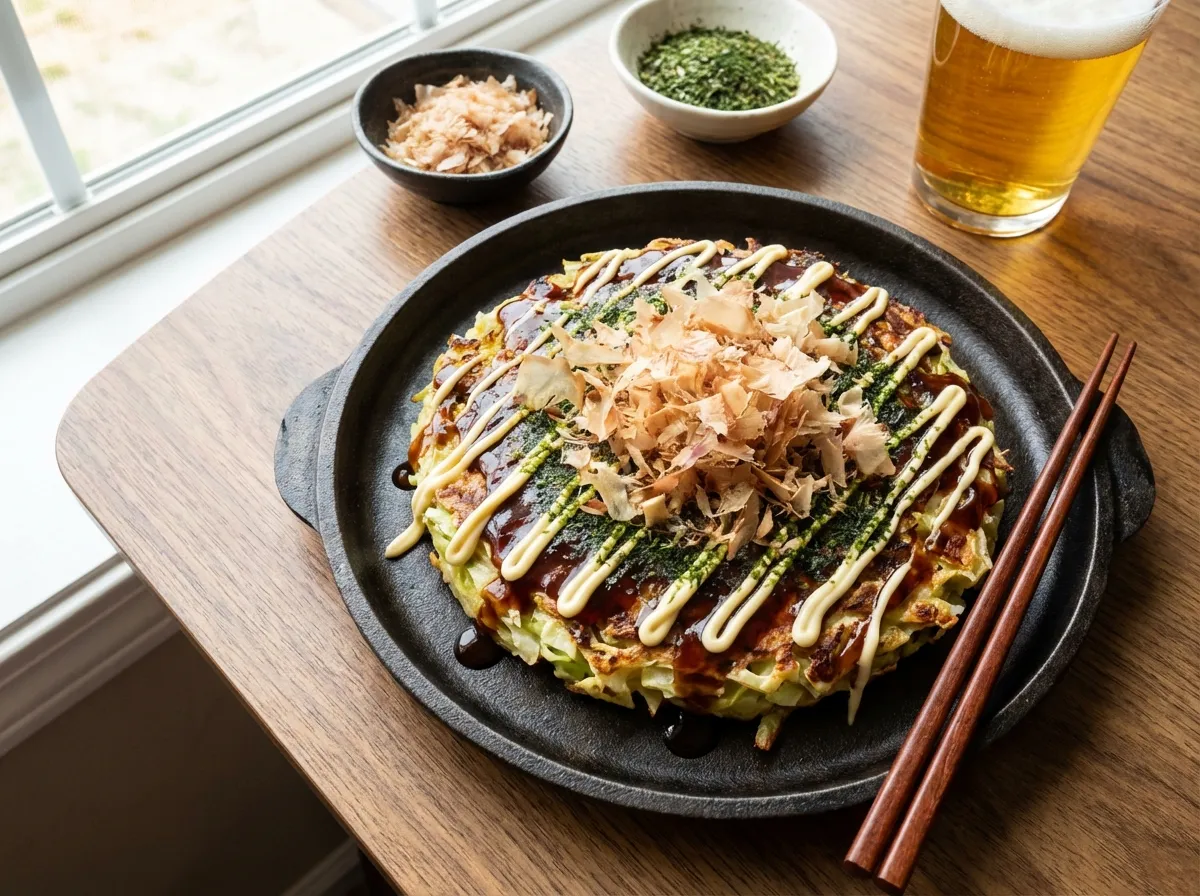
Okonomiyaki (Japanese Savoury Pancake)
A crispy, cabbage-loaded Japanese pancake topped with tangy sauce, mayo, bonito flakes, and seaweed — Osaka street food at its best.
Details

Ingredients
- 2 cups cabbage, finely shredded
- 3/4 cup all-purpose flour
- 1/2 cup dashi stock (or water + 1/2 tsp dashi powder)
- 2 large eggs
- 2 green onions, sliced
- 4 slices bacon or pork belly
- Toppings:
- Okonomiyaki sauce (or mix: 2 tbsp Worcestershire + 1 tbsp ketchup + 1 tsp soy sauce)
- Japanese mayonnaise (Kewpie)
- Bonito flakes (katsuobushi)
- Aonori (seaweed flakes)
Instructions
- 1
Mix flour, dashi stock, and eggs into a batter. Fold in shredded cabbage and green onions.
- 2
Heat a large skillet or griddle over medium heat. Lay bacon slices on the pan. Spoon the batter on top of the bacon and shape into a round about 1-inch thick.
- 3
Cook for 4-5 minutes until the bottom is golden and set. Carefully flip (bacon side up) and cook another 4-5 minutes.
- 4
Transfer to a plate. Drizzle with okonomiyaki sauce and mayonnaise in a zigzag pattern.
- 5
Top with bonito flakes (they'll dance in the heat!) and aonori.
About This Recipe
A culinary icon of Osaka, Okonomiyaki embodies the spirit of Japanese street food: versatile, satisfying, and bursting with flavor. The name itself, derived from 'okonomi' (how you like it) and 'yaki' (grilled), perfectly captures its customizable nature. At its core, it's a savory pancake renowned for its unique texture—a delicate crispness on the outside yielding to a fluffy, cabbage-rich interior, all bound by an umami-packed dashi-based batter. The secret to its signature lightness lies in finely shredded cabbage and a gentle hand with the batter, ensuring it remains airy rather than dense. Crucial ingredients include a good quality dashi stock for depth, fresh green onions, and savory pork belly or bacon, which crisps up beautifully within the pancake. Once cooked, the masterpiece is adorned with a symphony of toppings: a tangy-sweet Okonomiyaki sauce, rich Japanese mayonnaise (Kewpie brand is essential for its distinctive flavor), delicate bonito flakes that 'dance' from the heat, and fragrant aonori (seaweed flakes). While this recipe offers the classic Osaka-style with pork, common variations include adding seafood, mochi, or even noodles for the Hiroshima-style Okonomiyaki. Serve piping hot, directly from the griddle, to fully appreciate its layers of texture and taste.
Tips & Tricks
- • To achieve the perfect texture, avoid overmixing your batter. A few small lumps are perfectly acceptable; overmixing develops gluten, leading to a tougher pancake rather than a tender one.
- • For a delicious vegetarian or vegan variation, simply omit the bacon or pork belly. Consider adding grated nagaimo (Japanese mountain yam) to the batter for extra lightness and moisture, or incorporate sautéed mushrooms or corn kernels.
- • Okonomiyaki is best enjoyed immediately after cooking, but leftovers can be refrigerated for up to 2 days. Reheat gently in a lightly oiled pan over medium heat, or in a toaster oven, to help restore some of its crispness.
- • Enhance the experience by serving your Okonomiyaki with a sprinkle of shichimi togarashi (Japanese seven-spice blend) for a subtle kick, and pair it with a refreshing cold beer or a crisp dry sake.
Nutrition Facts
Per serving (approximate)