
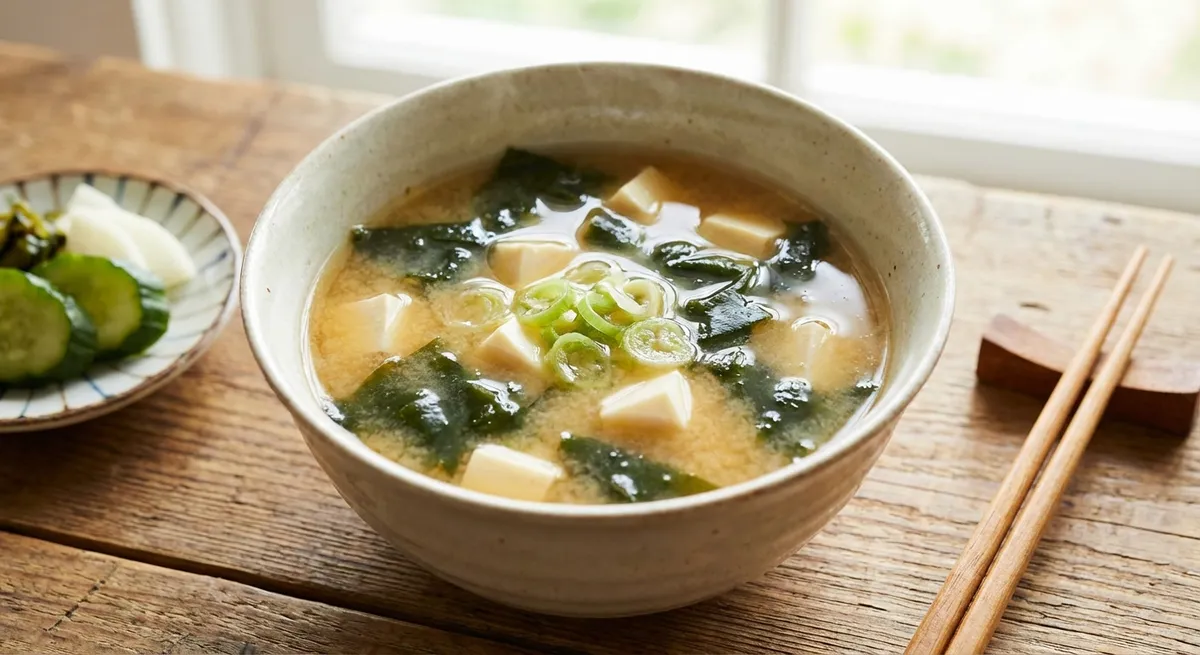
Miso Soup
Traditional Japanese soup with dashi stock, miso paste, tofu, and seaweed.
Details



Ingredients
- 4 cups dashi stock (or veg broth)
- 3 tbsp miso paste
- 1/2 block silken tofu, cubed
- 2 green onions, sliced
- 1 tbsp dried wakame seaweed
Instructions
- 1
Bring dashi to a simmer.
- 2
Add tofu and wakame. Simmer 1 min.
- 3
Remove from heat.
- 4
Whisk in miso paste (do not boil miso).
- 5
Top with green onions and serve.
About This Recipe
The very essence of Japanese comfort, miso soup is far more than just a side dish; it's a daily ritual, a cornerstone of nearly every Japanese meal, from hearty breakfasts to elegant dinners. Its profound cultural significance lies in its simplicity and the nourishing warmth it provides, often symbolizing home and well-being. What makes this humble soup so special is the intricate dance of umami, primarily derived from its two main components: dashi, a savory broth typically made from kombu seaweed and katsuobushi (dried bonito flakes), and miso paste, a fermented soybean paste. The key technique lies in reverence for the miso itself; it should never be boiled vigorously, as high heat can destroy the beneficial probiotics and delicate flavors. Instead, whisk the miso into the warm dashi just before serving, off the direct heat, to preserve its nuanced character. While traditional dashi is essential for authentic depth, a vegetarian kombu dashi or even a good quality vegetable broth can serve as a suitable base. Experiment with various miso types—white (shiro) for a sweeter, milder soup, or red (aka) for a bolder, more robust profile. Silken tofu offers a delicate texture, but firm or fried tofu are also delicious variations. Common additions include slivered daikon, mushrooms, or clams for added complexity. Serve this wholesome soup as a soothing start to any meal, particularly alongside grilled fish, rice, or as a restorative light lunch.
Tips & Tricks
- • To preserve the delicate flavor and beneficial probiotics of the miso, always whisk it into the dashi off the heat or at a very low simmer, never allowing the soup to come to a rolling boil after the miso is added.
- • For a richer flavor profile, consider using red (aka) miso instead of white (shiro) miso, or a blend of both. You can also add other vegetables like thinly sliced shiitake mushrooms or a handful of spinach for more nutrients.
- • Miso soup is best enjoyed fresh. If making ahead, prepare the dashi and store it separately from the miso, tofu, and wakame. Assemble and gently heat just before serving to maintain optimal texture and flavor.
- • This classic soup makes an ideal accompaniment to virtually any Japanese meal, from sushi and sashimi to grilled chicken or tempura. It also serves wonderfully as a light, comforting appetizer or a simple, warming snack.
Nutrition Facts
Per serving (approximate)