
Bibimbap
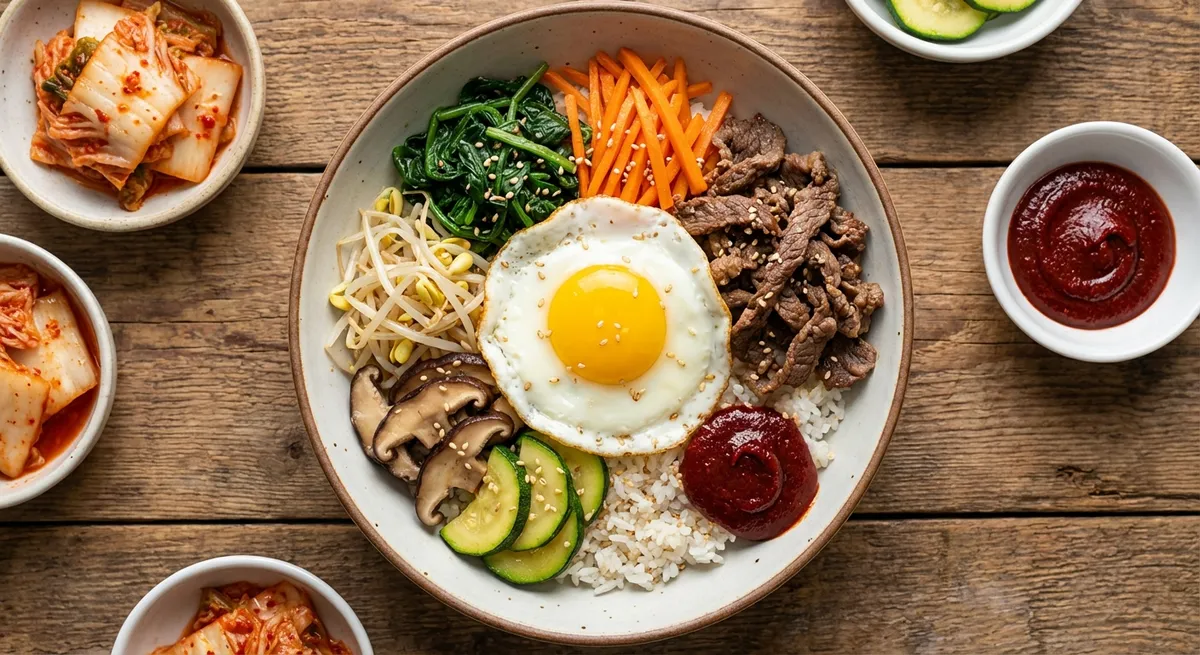
Korean mixed rice bowl with sautéed vegetables, beef, a fried egg, and spicy gochujang sauce.
Details

Ingredients
- 2 cups cooked white rice
- 100g beef, sliced and marinated (soy sauce, sesame oil)
- 1 cup spinach, blanched
- 1 cup bean sprouts, blanched
- 1 carrot, julienned and sautéed
- 2 eggs
- 2 tbsp gochujang (chili paste)
- Sesame oil
Instructions
- 1
Prepare all vegetables and meat separately.
- 2
Stir-fry beef until cooked.
- 3
Fry eggs sunny-side up.
- 4
Place rice in a bowl.
- 5
Arrange vegetables and meat on top.
- 6
Top with egg and a dollop of gochujang.
- 7
Mix everything together before eating.
About This Recipe
Bibimbap, meaning "mixed rice," is a vibrant cornerstone of Korean cuisine, cherished for its beautiful presentation and harmonious blend of flavors and textures. Originating from ancestral rituals where leftover side dishes were mixed with rice for a single, satisfying meal, it has evolved into a global culinary icon. What makes Bibimbap truly special is its inherent balance: the comforting warmth of perfectly cooked rice, the earthy freshness of meticulously prepared namul (sautéed and seasoned vegetables like spinach and bean sprouts), the savory depth of marinated beef (bulgogi-style or ground), and the rich, runny yolk of a fried egg. A crucial element is the artful arrangement of ingredients around a central mound of rice, creating a visually stunning mosaic of color and bounty. Key techniques involve individually preparing and seasoning each vegetable component, ensuring distinct flavors rather than a muddled mix. Ingredient notes: while gochujang is paramount for its sweet-spicy kick, a drizzle of nutty sesame oil is equally vital for aroma and mouthfeel. Common variations include dolsot bibimbap, served in a sizzling hot stone pot to create a coveted crispy rice crust, or substituting beef with tofu, chicken, or seafood for diverse palates. It's traditionally served with a side of kimchi and a clear broth, allowing each diner to customize their bowl with the fiery gochujang before mixing thoroughly to enjoy every perfectly seasoned bite.
Tips & Tricks
- • For perfectly distinct vegetable components, blanch your spinach and bean sprouts separately, shocking them in ice water immediately after to preserve their vibrant color and crisp texture before seasoning lightly with sesame oil and salt.
- • To make this vegetarian-friendly, substitute the beef with firm tofu, pressed and pan-fried until golden, or a medley of sautéed mushrooms for an earthy umami alternative.
- • Prepare the individual vegetable components (namul) and marinate the beef up to a day in advance; store them separately in airtight containers in the refrigerator, assembling the bowls just before serving for maximum freshness.
- • Enhance the traditional experience by serving your Bibimbap with a small bowl of simple anchovy broth or a clear miso soup on the side, alongside an assortment of banchan like kimchi or pickled radishes.
Nutrition Facts
Per serving (approximate)