
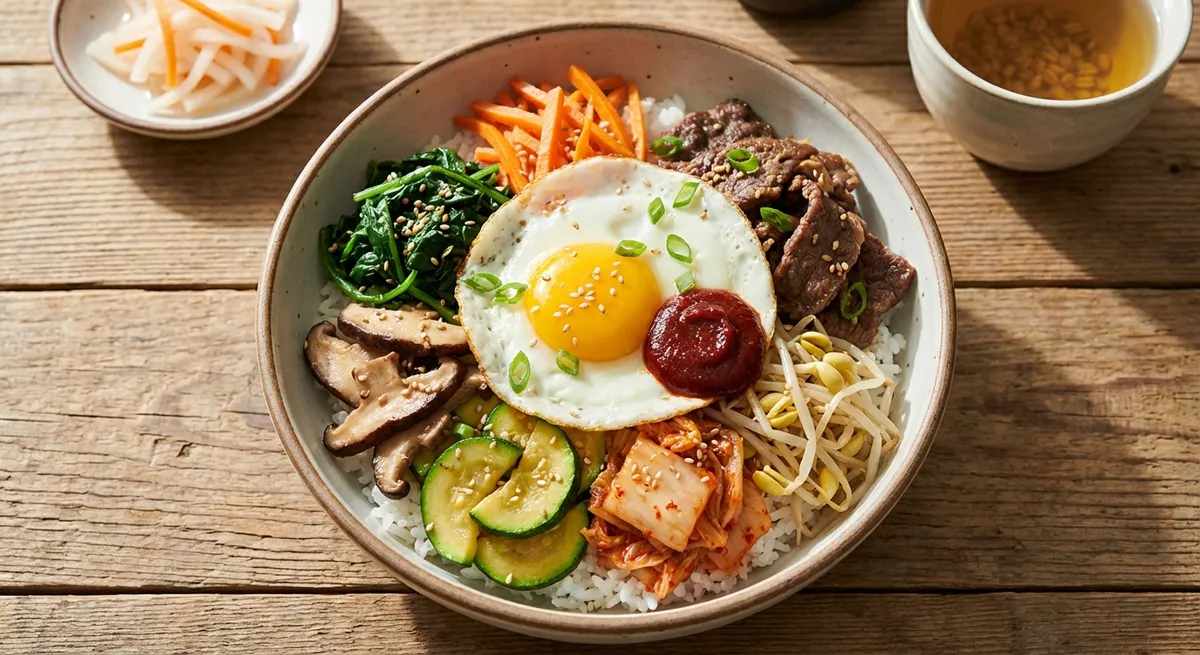
Korean Bibimbap
A vibrant bowl of steamed rice topped with sautéed vegetables, spicy gochujang sauce, a fried egg, and optional beef.
Details


Ingredients
- 4 cups steamed short-grain rice
- 1/2 lb beef bulgogi or ground beef (optional)
- 2 cups spinach, blanched and seasoned
- 1 carrot, julienned and sautéed
- 1 zucchini, julienned and sautéed
- 1 cup bean sprouts, blanched
- 4 shiitake mushrooms, sliced and sautéed
- 4 fried eggs
- 3 tbsp gochujang (Korean red pepper paste)
- 1 tbsp sesame oil
- 1 tbsp soy sauce
- 1 tbsp rice vinegar
- 1 tsp sugar
- Toasted sesame seeds
- Kimchi, for serving
Instructions
- 1
Prepare all vegetables separately: blanch spinach and bean sprouts; sauté carrot, zucchini, and mushrooms in sesame oil with a pinch of salt.
- 2
If using beef, cook bulgogi or ground beef in a hot skillet until caramelized.
- 3
Make the sauce: whisk gochujang, sesame oil, soy sauce, rice vinegar, and sugar.
- 4
Divide steamed rice among 4 bowls. Arrange vegetables and beef in neat sections on top of the rice.
- 5
Top each bowl with a fried egg and drizzle with gochujang sauce.
- 6
Sprinkle with sesame seeds. Serve with kimchi on the side.
- 7
Mix everything together vigorously before eating — that's the proper way.
About This Recipe
A kaleidoscope of flavors and textures, Bibimbap, meaning 'mixed rice,' is more than just a meal; it's a culinary canvas reflecting the rich tradition and balance of Korean cuisine. Historically, it served as an ingenious way to utilize leftover banchan (side dishes) on Lunar New Year's Eve, symbolizing a fresh start. What truly sets Bibimbap apart is its meticulous presentation of individually prepared ingredients – often referred to as 'obangsaek,' representing the five cardinal colors (white, black, red, green, yellow) and their associated elements and directions – creating a visually stunning and nutritionally complete bowl. Key techniques involve separately preparing and seasoning each vegetable (namul) to highlight its unique flavor and texture before artfully arranging them over warm, sticky short-grain rice. The optional bulgogi beef or ground beef adds a savory depth, while the vibrant gochujang sauce provides a characteristic spicy, sweet, and savory kick. Variations abound, from the sizzling Dolsot Bibimbap served in a hot stone pot, which creates a coveted crispy rice crust, to myriad choices of protein like tofu or chicken. Always serve this communal dish with a dollop of fresh kimchi and perhaps a simple clear broth, encouraging diners to mix everything together just before eating to achieve the perfect harmonious bite.
Tips & Tricks
- • To maximize flavor, season each blanched or sautéed vegetable component individually while still warm with a touch of sesame oil, minced garlic, and a pinch of salt before assembling the bowl.
- • For a delicious vegetarian or vegan alternative, substitute the beef with pan-fried firm tofu or tempeh, and simply omit the fried egg, ensuring your gochujang brand is vegan-friendly.
- • All individual vegetable and meat components can be prepared up to 2 days in advance and stored separately in airtight containers in the refrigerator, making assembly quick and easy just before mealtime.
- • Enhance the dining experience by pairing your Bibimbap with a light, clear broth like a simple anchovy-based soup or a refreshing iced barley tea to complement its rich and spicy flavors.
Nutrition Facts
Per serving (approximate)