
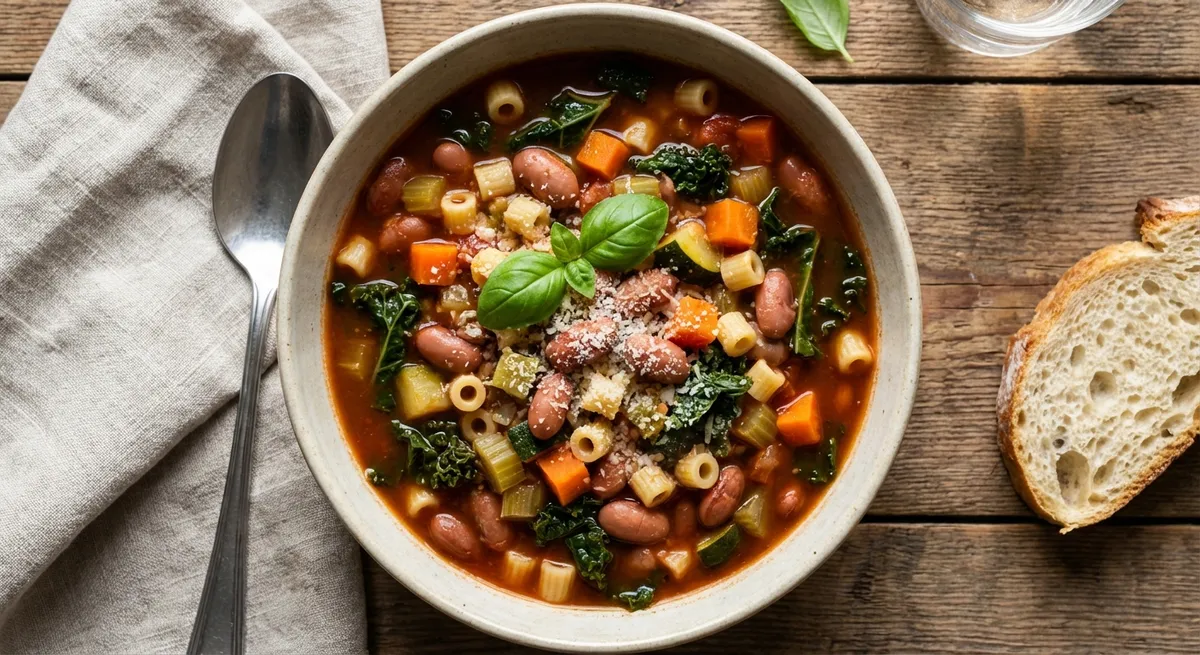
Classic Minestrone Soup
Hearty Italian vegetable soup with beans, pasta, and rich tomato broth.
Details



Ingredients
- 2 tbsp olive oil
- 1 onion, chopped
- 2 carrots, chopped
- 2 celery stalks, chopped
- 2 cloves garlic, minced
- 1 zucchini, chopped
- 400g canned diced tomatoes
- 1 liter vegetable broth
- 400g canned kidney beans, drained
- 1/2 cup small pasta shells
- 1 tsp dried oregano
Instructions
- 1
Heat oil in a large pot. Sauté onion, carrots, and celery for 5-8 minutes.
- 2
Add garlic and zucchini, cook for 2 minutes.
- 3
Stir in tomatoes, broth, and oregano. Bring to a boil.
- 4
Reduce heat and simmer for 20 minutes.
- 5
Stir in beans and pasta. Cook until pasta is tender (about 10 minutes).
- 6
Season with salt and pepper.
- 7
Serve hot with parmesan cheese.
About This Recipe
Minestrone, a cornerstone of Italian peasant cooking, is more than just a soup; it's a celebration of seasonal abundance and resourcefulness. Its very name, derived from "minestra" (soup) and the augmentative suffix "-one," suggests a hearty, substantial meal, historically built from whatever vegetables were ripe and readily available. What makes this classic rendition so special is its layering of flavors: the aromatic base of soffritto (onion, carrots, celery) gently sautéed in olive oil, the bright acidity of diced tomatoes mellowed by simmering, and the earthy depth provided by kidney beans and vegetable broth. Key techniques involve patiently building the flavor foundation before introducing more delicate ingredients like zucchini, ensuring each component retains its integrity while contributing to the overall harmony. For best results, use high-quality canned tomatoes and fresh, crisp vegetables. Common variations might include adding leafy greens like spinach or kale, a sprinkle of parmesan rind during simmering for extra umami, or different small pasta shapes. Serve steaming hot, perhaps with a drizzle of extra virgin olive oil and a grating of Pecorino Romano, alongside crusty artisan bread to sop up every drop of its rich, nourishing broth.
Tips & Tricks
- • To deepen the flavor profile of your minestrone, sauté your aromatic vegetables (onion, carrots, celery, garlic) slowly until they are very tender and slightly caramelized, creating a rich soffritto base before adding liquids. This patience pays off in a more complex and satisfying broth.
- • For an added nutritional boost and a different texture, consider swapping out kidney beans for cannellini beans or adding a handful of chopped fresh spinach or kale during the last 5-10 minutes of cooking. This is a great way to incorporate more greens.
- • Minestrone often tastes even better the next day as the flavors meld and deepen; make a large batch and store leftovers in an airtight container in the refrigerator for up to 3-4 days, reheating gently on the stovetop with a splash of extra broth or water if needed. If making ahead, cook pasta separately and add just before serving to prevent it from getting mushy.
- • Elevate your minestrone by serving it with a generous dollop of fresh pesto stirred in at the table, or a sprinkle of freshly grated Parmesan cheese and a side of warm, garlic-rubbed bruschetta. A light, crisp white wine like Pinot Grigio would also be a delightful pairing.
Nutrition Facts
Per serving (approximate)