
Onigiri (Japanese Rice Balls)
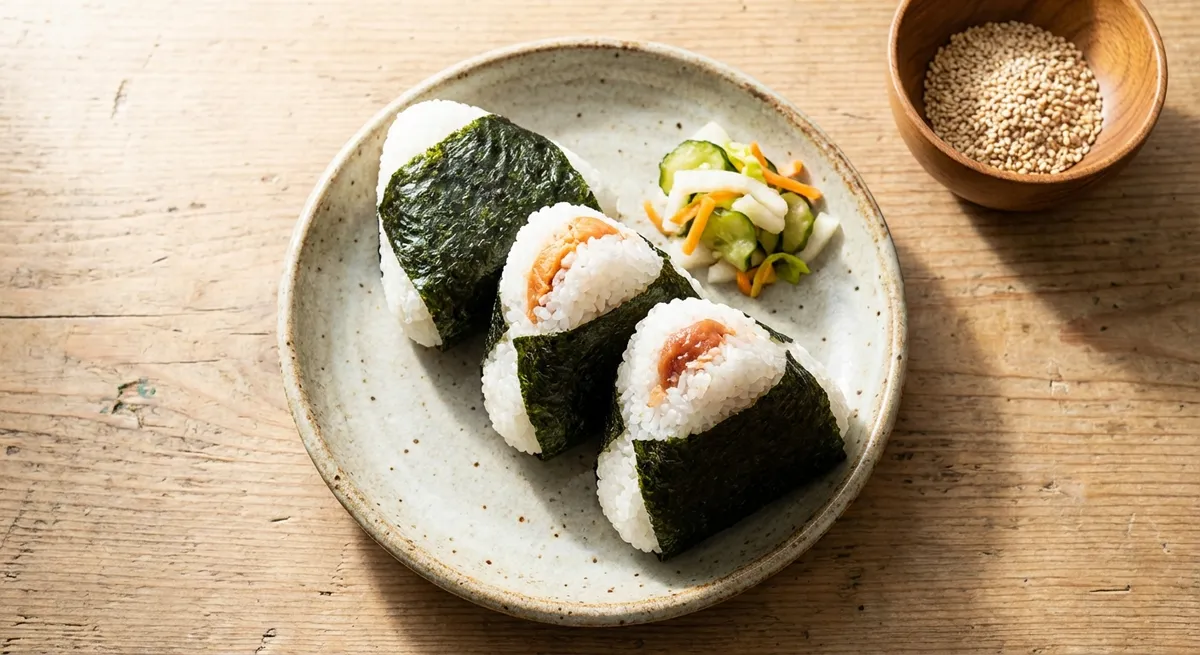
Perfectly shaped triangles of seasoned rice with a savoury filling, wrapped in crispy nori — Japan's favourite portable snack.
Details

Ingredients
- 3 cups cooked Japanese short-grain rice, still warm
- 1 tsp salt
- Fillings (choose one or more):
- Canned tuna mixed with Kewpie mayo and soy sauce
- Umeboshi (pickled plum)
- Salmon flakes (cooked and seasoned)
- Teriyaki chicken, chopped
- Wrapping:
- Nori sheets, cut into strips
- Sesame seeds (optional)
Instructions
- 1
Wet your hands and sprinkle with salt to prevent sticking and season the rice.
- 2
Place about 1/2 cup warm rice in your palm. Make a well in the centre and add 1 tbsp of filling.
- 3
Close the rice around the filling and shape into a triangle by cupping your hands and pressing gently but firmly. Rotate and press to form even sides.
- 4
Wrap a strip of nori around the base of each onigiri.
- 5
Sprinkle with sesame seeds if desired. Serve immediately or wrap in cling film for later.
About This Recipe
From ancient origins as a portable meal for samurai and farmers, Onigiri has evolved into Japan's beloved comfort food and quintessential grab-and-go snack. These artfully shaped rice balls encapsulate the essence of Japanese culinary simplicity: perfectly cooked, seasoned short-grain rice cradling a savoury filling, all neatly wrapped in a crisp sheet of nori. What makes onigiri special lies in its textural contrast and versatility. The plump, slightly sticky texture of premium Japanese short-grain rice is paramount; it provides the ideal canvas for a myriad of fillings, from the creamy umami bomb of tuna mixed with Kewpie mayo and soy, to the bright tang of umeboshi, or the delicate flakiness of seasoned salmon. The key technique involves shaping the warm rice with lightly salted, wet hands to prevent sticking and impart subtle seasoning, ensuring the rice is gently moulded rather than overly compressed to maintain a soft, appealing mouthfeel. While the classic triangle shape is iconic, onigiri can also be formed into cylinders or traditional spheres. They are an indispensable component of bento boxes, a delightful picnic staple, or a satisfying light lunch when paired with a simple miso soup and some refreshing tsukemono.
Tips & Tricks
- • To achieve perfectly shaped onigiri that hold together without being dense, dampen your hands with water and lightly rub them with salt before handling the warm rice. This prevents sticking and subtly seasons the outer layer, but remember to press gently, not too firmly.
- • For a delicious plant-based alternative, try stuffing your onigiri with sautéed king oyster mushrooms seasoned with soy sauce and a hint of sesame oil, or use a savory mixture of finely diced, seasoned tofu.
- • Onigiri is best enjoyed fresh to appreciate the soft rice and crisp nori. If preparing ahead, wrap each onigiri tightly in plastic film and store in the refrigerator for up to 24 hours; gently warm in the microwave for 10-15 seconds before serving to restore its texture.
- • Elevate your onigiri experience by serving it alongside a refreshing cup of green tea, a small side of pickled ginger (gari), and perhaps a sprinkle of shichimi togarashi for a hint of spice.
Nutrition Facts
Per serving (approximate)