
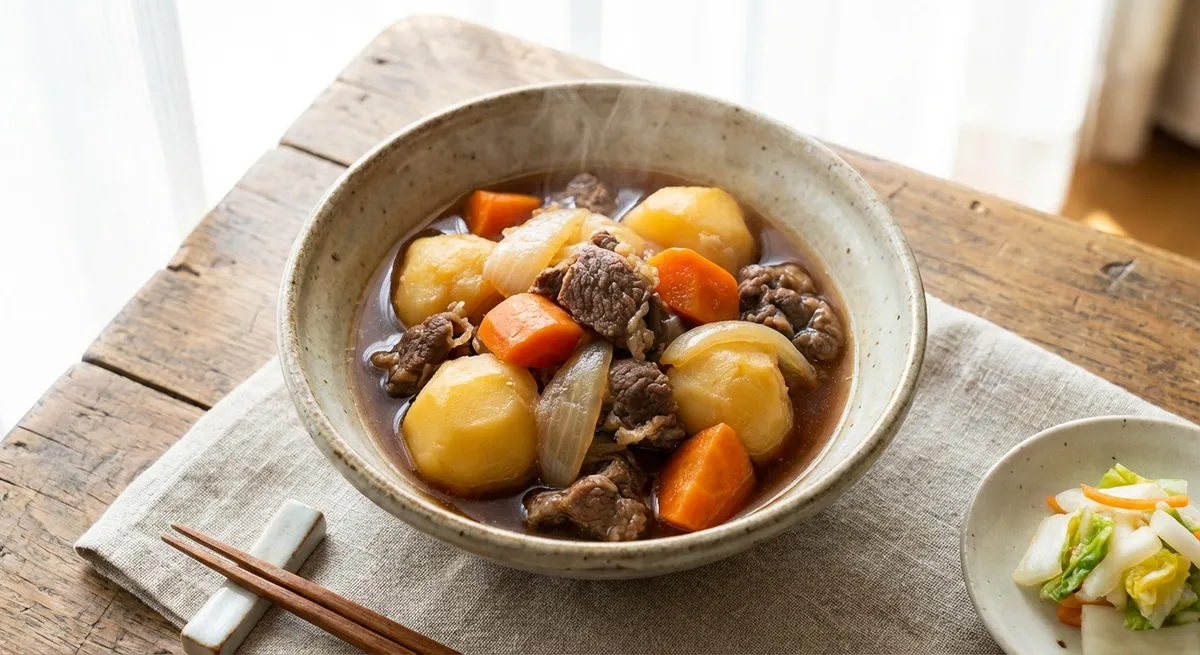
Nikujaga (Japanese Meat and Potatoes)
Japan's ultimate home-cooked comfort — tender beef, potatoes, and onions simmered in a sweet soy-dashi broth until meltingly soft.
Details

Ingredients
- 300g thinly sliced beef (or pork)
- 3 medium potatoes, cut into chunks
- 1 large onion, cut into wedges
- 1 carrot, sliced
- 100g shirataki noodles (optional), drained
- 1 tbsp vegetable oil
- Broth:
- 1.5 cups dashi stock
- 3 tbsp soy sauce
- 2 tbsp mirin
- 2 tbsp sake
- 1 tbsp sugar
- Frozen peas, for garnish
Instructions
- 1
Heat vegetable oil in a pot over medium heat. Cook sliced beef briefly until just browned. Remove.
- 2
Sauté onion for 2 minutes. Add potatoes and carrot, stir for 1 minute.
- 3
Add dashi, soy sauce, mirin, sake, and sugar. Bring to a boil.
- 4
Add shirataki noodles if using. Reduce heat and simmer covered for 20 minutes until potatoes are tender.
- 5
Return beef to the pot. Cook 2-3 minutes more. The broth should be mostly absorbed.
- 6
Serve in bowls garnished with frozen peas (they'll defrost in the heat).
About This Recipe
More than just 'meat and potatoes,' Nikujaga is the quintessential Japanese comfort food, a culinary embrace that warms homes across Japan. Believed to have its roots in the late 19th century when Admiral Tōgō Heihachirō sought to replicate a British naval stew using readily available Japanese ingredients, it quickly evolved into a beloved staple. What makes Nikujaga truly special is the exquisite balance of its sweet and savory dashi-based broth, which tenderly coaxes the flavors from thinly sliced beef (or pork), chunky potatoes, and sweet onions into a cohesive, deeply satisfying whole. The magic lies in the slow, gentle simmer, allowing the starchy potatoes to slightly break down, thickening the sauce and absorbing every nuanced drop of the mirin, soy, and sake-infused liquid. While the recipe is deceptively simple, selecting good quality, thinly sliced meat and ensuring your dashi is fresh will elevate the dish significantly. Don't be shy about adding shirataki noodles or even green beans for extra texture and color. Serve this soul-soothing stew piping hot, ideally nestled beside a bowl of fluffy steamed rice, perhaps with a side of miso soup and some tsukemono (Japanese pickles), for an authentic and deeply comforting Japanese meal.
Tips & Tricks
- • To prevent potatoes from getting mushy while still absorbing flavor, boil them briefly in water for 5 minutes before adding to the broth; this par-cooks them and removes excess starch, allowing them to finish cooking perfectly in the stew.
- • If dashi stock is unavailable, you can use a good quality chicken broth for the liquid, though the flavor profile will be less authentically Japanese. For a vegetarian option, swap beef for firm tofu or konnyaku and use kombu dashi.
- • Nikujaga tastes even better the next day as the flavors deepen; store leftovers in an airtight container in the refrigerator for up to 3 days and gently reheat on the stovetop or in the microwave.
- • Beyond steamed rice, consider serving Nikujaga with a sprinkle of shichimi togarashi for a touch of heat, or alongside a simple green salad dressed with a sesame vinaigrette to cut through the richness.
Nutrition Facts
Per serving (approximate)