
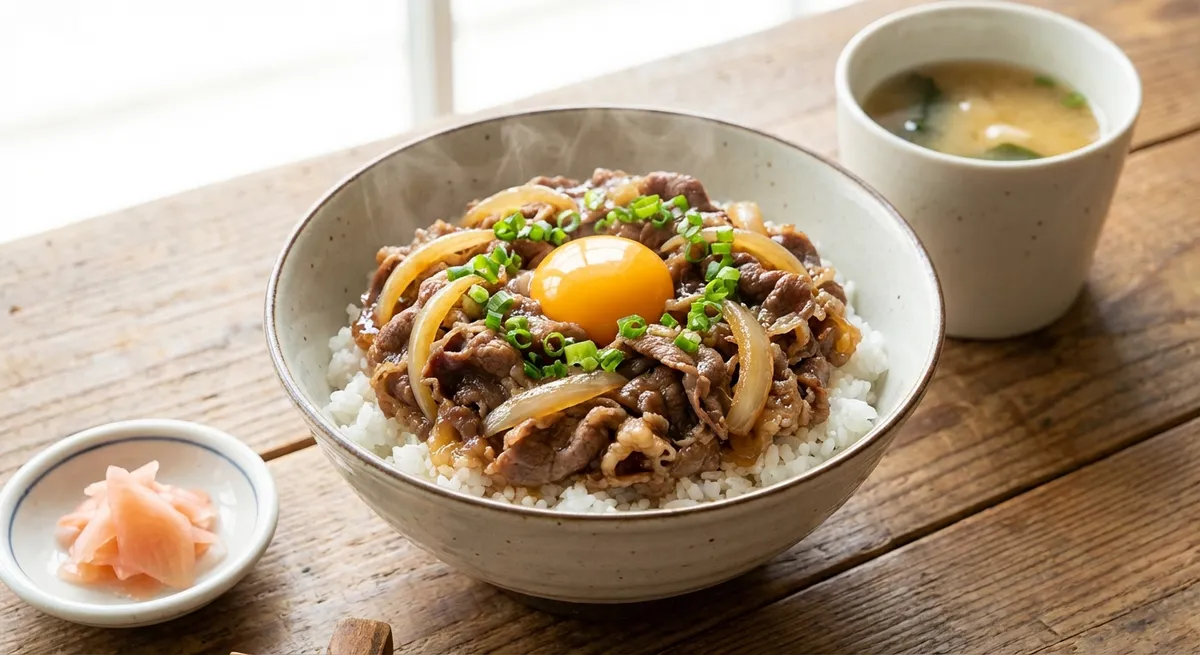
Gyudon Beef Rice Bowl
Thinly sliced beef and soft onions simmered in a sweet soy-dashi broth, served over steaming rice — Japan's beloved fast-food comfort meal.
Details



Ingredients
- 300g thinly sliced beef (ribeye or sirloin)
- 1 large onion, thinly sliced
- 1/2 cup dashi stock (or 1/2 cup water + 1 tsp dashi powder)
- 3 tbsp soy sauce
- 2 tbsp mirin
- 1 tbsp sake
- 1 tbsp sugar
- 2 cups cooked Japanese short-grain rice
- Toppings:
- Pickled ginger (beni shoga)
- Soft-boiled egg
- Sliced green onions
- Shichimi togarashi (seven-spice)
Instructions
- 1
Combine dashi stock, soy sauce, mirin, sake, and sugar in a skillet or shallow pan. Bring to a simmer.
- 2
Add sliced onion and cook for 5 minutes until softened and translucent.
- 3
Add thinly sliced beef in a single layer. Cook for 3-4 minutes until just cooked through — don't overcook.
- 4
Divide steaming rice into bowls. Spoon the beef, onions, and broth generously over the top.
- 5
Top with pickled ginger, a soft-boiled egg, green onions, and a sprinkle of shichimi togarashi.
About This Recipe
Gyudon, Japan's iconic beef bowl, is more than just a meal; it's a culinary embrace, a testament to the comforting power of simple ingredients perfectly balanced. Originating in the late 19th century as a convenient, affordable dish for the working class, it quickly became a staple, beloved for its ability to deliver profound satisfaction in every bite. What makes it truly special is the harmonious interplay of tender, thinly sliced beef and sweet, translucent onions, simmered in an umami-rich broth. This broth, a delicate alchemy of dashi, soy sauce, mirin, sake, and a touch of sugar, is the soul of gyudon, infusing the beef with layers of savory-sweetness. The key technique involves quickly braising the thinly sliced beef — ideally ribeye or sirloin for their marbling — to ensure it remains succulent, while the onions soften to an almost custardy texture. Serve this aromatic beef and onion mixture generously over steaming, fluffy Japanese short-grain rice, allowing the flavorful broth to seep into every grain. While delicious on its own, it truly shines when adorned with traditional toppings like bright pickled ginger (beni shoga), a luscious soft-boiled egg that adds creaminess, vibrant sliced green onions, and a sprinkle of shichimi togarashi for a gentle spice kick. Variations might include a raw egg yolk stirred in for richness, or a sprinkle of cheese in some modern interpretations.
Tips & Tricks
- • To achieve perfectly thin beef slices, a crucial element of gyudon, place your beef in the freezer for about 20-30 minutes before slicing. This firms it up just enough to make paper-thin cuts against the grain with ease, ensuring tender results.
- • If dashi stock is unavailable, you can create a quick substitute by steeping a 5-inch piece of kombu (dried kelp) in 1/2 cup of hot water for 10 minutes, then adding 1/2 teaspoon of bonito flakes for another 5 minutes, straining before use.
- • For make-ahead convenience, prepare the beef and onion mixture and store it separately from the cooked rice in airtight containers in the refrigerator for up to 2-3 days. Reheat the beef gently on the stovetop or microwave, then serve fresh over freshly steamed rice.
- • Enhance the comfort factor by pairing your Gyudon with a simple side of miso soup and a small plate of crunchy tsukemono (Japanese pickles), which offer a delightful contrast in texture and a palate-cleansing tartness to balance the rich beef.
Nutrition Facts
Per serving (approximate)