
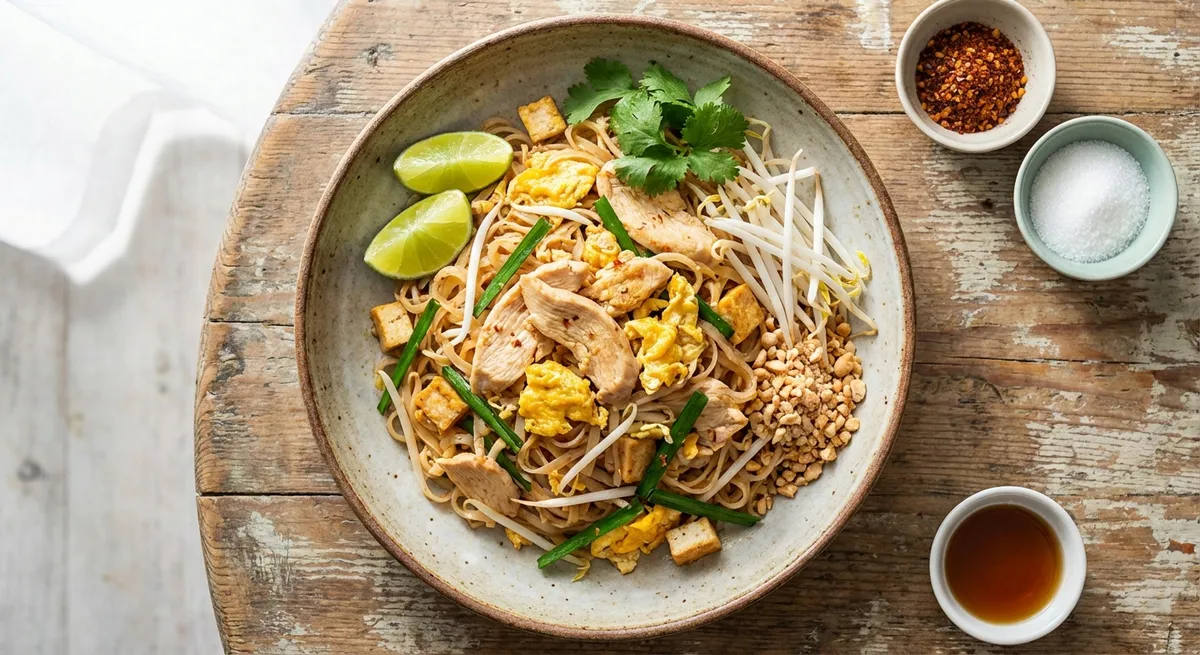
Classic Chicken Pad Thai
A popular Thai stir-fry noodle dish with a perfect balance of sweet, sour, and savory flavors.
Details

Ingredients
- 200g flat rice noodles
- 2 tbsp vegetable oil
- 200g chicken breast, sliced thin
- 2 eggs, whisked
- 1 cup bean sprouts
- 3 green onions, sliced
- 1/4 cup roasted peanuts, chopped
- Sauce:
- 3 tbsp fish sauce
- 1 tbsp tamarind paste
- 1 tbsp palm sugar or brown sugar
- 1 tsp chili flakes
Instructions
- 1
Soak rice noodles in warm water for 20-30 minutes until pliable but firm.
- 2
Whisk sauce ingredients together in a small bowl.
- 3
Heat oil in a wok over high heat. Add chicken and stir-fry until cooked.
- 4
Push chicken to side. Pour in eggs and scramble.
- 5
Add drained noodles and sauce. Toss quickly to coat.
- 6
Add bean sprouts and half the peanuts and green onions.
- 7
Toss for another minute until noodles are tender.
- 8
Serve hot, topped with remaining peanuts, green onions, and lime wedges.
About This Recipe
Few dishes capture the vibrant soul of Thai street food quite like Pad Thai, a culinary icon that blossomed into Thailand's national dish in the mid-20th century, championed for its role in promoting national identity and economic growth. What makes this stir-fried noodle classic so universally adored is its masterful orchestration of flavors: a delicate dance between the sweet, sour, salty, and optionally spicy. The hallmark of an authentic Pad Thai lies in the balance of its signature sauce, typically a blend of fish sauce, tamarind paste, and palm sugar, which coats tender rice noodles. Key techniques involve stir-frying over high heat to achieve a 'wok hei' char, ensuring the noodles remain distinct and chewy rather than clumping. Ingredient notes are crucial: use flat rice noodles (sen lek), properly rehydrated to be pliable yet firm; authentic tamarind paste for its unique tang, not tamarind concentrate; and quality fish sauce for umami depth. Common variations include using shrimp (Pad Thai Goong), tofu for a vegetarian version, or even a mix of chicken and shrimp, often with added dried shrimp, salted radish, or chives. Always serve Pad Thai immediately with a fresh lime wedge to squeeze over, crushed roasted peanuts for texture, and additional chili flakes or sriracha for those who crave more heat.
Tips & Tricks
- • To prevent sticky or broken noodles, soak your flat rice noodles in warm water for only 15-20 minutes until pliable but still slightly firm (al dente). They will finish cooking and absorb the sauce perfectly in the hot wok.
- • For a delightful vegetarian twist, substitute the chicken with 200g of pressed and pan-fried extra-firm tofu cubes. For deeper flavor, consider adding a dash of mushroom-flavored soy sauce in place of some fish sauce.
- • Pad Thai is best enjoyed fresh from the wok, but leftovers can be stored in an airtight container in the refrigerator for up to 2 days. Reheat gently in a wok or microwave with a splash of water to rehydrate the noodles.
- • Enhance the authentic experience by serving your Pad Thai with a side of fresh banana blossoms and finely sliced raw green mango or papaya, which add refreshing bitterness and crunch to complement the rich flavors.
Nutrition Facts
Per serving (approximate)