
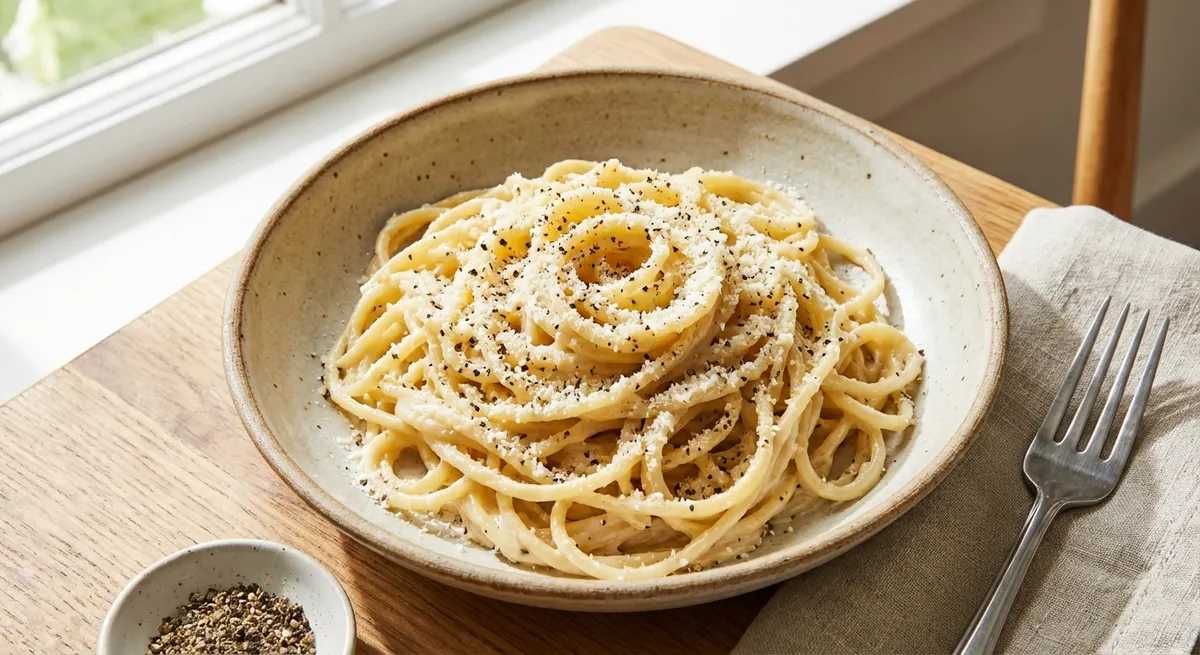
Cacio e Pepe
The Roman holy trinity of pasta, Pecorino Romano, and black pepper — deceptively simple and stunningly delicious.
Details

You Might Also Like

Chicken Satay with Peanut Sauce

Lamb Tagine with Apricots and Almonds
Ingredients
- 400g tonnarelli or spaghetti
- 200g Pecorino Romano, finely grated
- 2 tbsp freshly cracked black pepper
- Reserved pasta water
Instructions
- 1
Bring a large pot of salted water to a boil. Cook pasta until 1 minute short of al dente. Reserve 2 cups pasta water before draining.
- 2
Toast black pepper in a dry large skillet over medium heat for 1-2 minutes until fragrant.
- 3
Add 1 cup pasta water to the pepper and bring to a simmer.
- 4
Add the drained pasta and toss vigorously, adding more pasta water as needed.
- 5
Remove from heat. Add Pecorino Romano a handful at a time, tossing constantly to create a creamy, emulsified sauce. Add splashes of pasta water to reach a glossy, coating consistency.
- 6
Serve immediately with extra pepper and Pecorino on top.
About This Recipe
Cacio e Pepe, meaning "cheese and pepper," is the epitome of Roman cucina povera, a testament to how profoundly delicious simplicity can be. Rooted in the ancient culinary traditions of Latium shepherds, who relied on long-lasting, portable ingredients, this iconic pasta dish transforms just three core components—pecorino, black pepper, and pasta—into an ethereal, creamy masterpiece. Its magic lies entirely in the emulsification: expertly combining the starchy pasta water with the finely grated Pecorino Romano and freshly cracked pepper at just the right temperature. The result is a velvety, intensely savory sauce that clings to every strand of tonnarelli or spaghetti, boasting a pungent peppery kick and the distinct umami of aged sheep's milk cheese. The key technique involves a rapid, vigorous stirring to prevent the cheese from clumping, ensuring a smooth, cohesive sauce that enrobes, rather than sits atop, the pasta. This dish is not just food; it’s an experience, a delicate balance of heat, salt, and starch that embodies the soul of Italian cooking.
Tips & Tricks
- • To achieve a perfectly creamy sauce, ensure your Pecorino Romano is very finely grated and at room temperature. Gradually add a small amount of starchy pasta water to the cheese and pepper mixture off the heat, whisking vigorously to create a smooth paste before adding the al dente pasta.
- • For a slightly milder flavor profile or if Pecorino Romano is too intense, you can use a 50/50 blend of Pecorino Romano and Parmigiano-Reggiano. While traditionalists might frown, this variation offers a different, still delicious, depth of flavor.
- • Cacio e Pepe is best enjoyed immediately upon preparation, as the sauce can separate or become pasty as it cools. If you must store leftovers, gently reheat them in a pan with a splash of water or broth, stirring constantly over low heat to try and re-emulsify the sauce.
- • Serve Cacio e Pepe simply, perhaps alongside a crisp, lightly dressed green salad with a lemon vinaigrette to cut through the richness. A glass of dry, crisp white wine like a Frascati or Vermentino would complement its bold flavors beautifully.
Nutrition Facts
Per serving (approximate)